SingaporeMotherhood | Baby & Toddler
October 2025
12 Fun & Easy Screen-Free Music Activities to do with Your Children at Home
As parents, we all know how challenging it can be to engage young children meaningfully at home. At such a tender age, little ones may not yet be ready for complicated games, and screens can feel like the easy option when energy runs high, even when we know that screen time can be detrimental to children’s development.
The Ministry of Health recommends no screen use at all for infants under 18 months, less than an hour a day of screen use for children aged 18 months to six years old, and less than two hours a day for those aged seven to 12 years old.1
How then, can we find screen-free ways to connect, bond, and nurture our child’s development? That’s where music becomes a lifesaver. Music is simple, natural, and deeply enjoyable for children. Even the youngest child can participate through movement, rhythm, and sound play.
We’ve seen how music-based activities help families create joyful moments, build developmental skills, and foster stronger bonds. These activities also mirror developmental benefits such as improved speech development, increased confidence, better social interaction, and stronger parent-child bonding — all while keeping young minds engaged without screens.
Try these 12 easy, screen-free musical activities that you can do with your young children. Best of all, they require little more than imagination and everyday items that you can find at home.
Energy-Burning Music and Movement
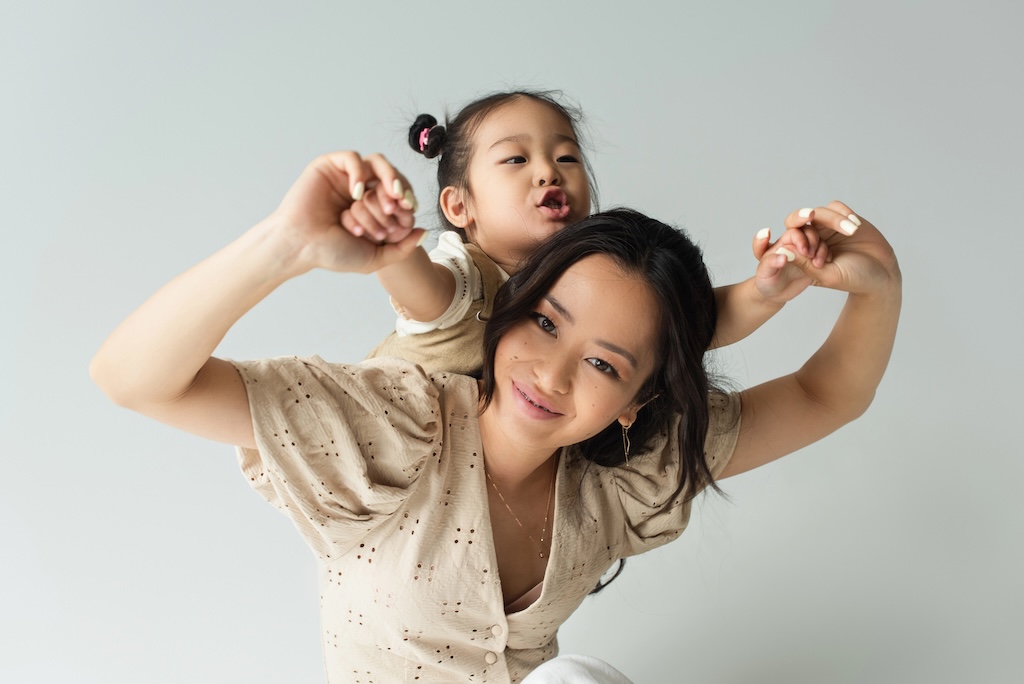
1. Musical “Transport Rides”
Transform your living room into different vehicles using music and movement:
- Airplane rides: Hold your child up while “flying” around the room to soaring classical music
- Train journeys: March in a line making “choo-choo” sounds with rhythmic stepping
- Car drives: Sit together and “steer” while making engine sounds to upbeat songs
- Boat sailing: Rock side to side on the floor to gentle, wave-like melodies
(See also: TOP MATERNITY, NEWBORN & FAMILY PHOTOGRAPHY STUDIOS IN SINGAPORE)
2. Dance Freeze Game
Play music and dance freely, then pause the music for everyone to freeze like statues. Resume music to continue dancing. This builds listening skills and body control.
3. Animal Movement Songs

Act out different animals while singing:
- Stomp like elephants (heavy, slow beats): The Elephant from ‘Carnival of the Animals (Saint-Saëns)’; ‘Baby Elephant Walk’ by Henry Mancini (slower tempo); Japanese children’s song ‘ZouSan’, or even a simple chant: “Stomp, stomp, stomp like an elephant” in slow 4/4.
- Hop like rabbits (quick, light rhythms): ‘Little Bunny Foo Foo’ (traditional); ‘Hippity Hop to the Barber Shop’ (nursery rhyme); ‘Little Peter Rabbit’ (campfire song), or chant: “Hop, hop, hop-hop-hop” in 2/4.
- Slither like snakes (smooth, flowing music): The Aquarium from ‘Carnival of the Animals (Saint-Saëns)’. Create glissandos on a xylophone or hum long, smooth tones.
- Flutter like butterflies (delicate, high-pitched): Learn ‘The Butterfly Dance Song for Children’ (by Patty Shukla), or The Swan from ‘Carnival of the Animals’. Add delicate sounds with triangle or chime bells to inspire fluttering arms.
Imaginative Musical Storytelling
4. Puppet Music Theater
Use socks, stuffed animals, or simple hand puppets to act out stories while singing. Let the puppet ‘sing’ in different voices and have conversations with your child.
(See also: FINDING MAGIC IN HELPING CHILDREN BUILD MINDSET, RESILIENCE AND INNER STRENGTH THROUGH STORIES)
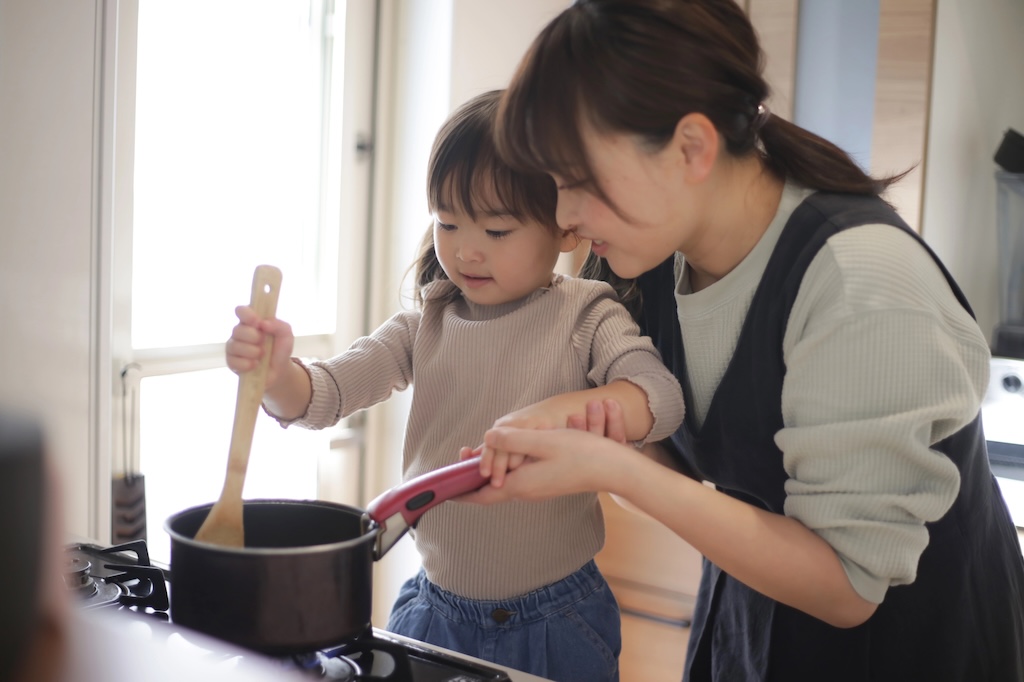
5. Musical Cooking Adventures
Turn meal preparation into songs:
- Sing about stirring soup in circular motions
- Create rhythms while chopping vegetables (safely, with child watching)
- Make up songs about ingredients and their colors/textures
- Turn setting the table into a rhythmic game
6. Weather Sound Stories
Create sound effects for different weather while telling stories:
- Rain: Tap fingers on surfaces
- Thunder: Clap hands or stomp feet
- Wind: Make “whooshing” sounds while moving arms
- Sunshine: Gentle humming with bright, happy movements
(See also: 5 PROVEN WAYS TO SUPPORT YOUR CHILD IN BILINGUAL LEARNING)
Everyday Items as Music Instruments
7. Kitchen Orchestra
Transform kitchen items into instruments:
- Pots and wooden spoons for drums
- Empty containers for shakers (fill with rice or beans)
- Glasses with different water levels for pitched instruments
- Colanders for unique percussion sounds
8. Texture Sound Exploration
Explore different materials and their sounds:
- Crinkle aluminum foil for “fire” sounds
- Rub sandpaper together for “scratchy” textures
- Tap on different surfaces (wood, plastic, metal) to compare tones
- Use bubble wrap for “popping” rhythms

9. Body Percussion Band
Create music using only your bodies:
- Clap hands in different patterns
- Stomp feet for bass sounds
- Pat thighs, chest, and cheeks for varied tones
- Snap fingers for accent beats
Interactive Singing Games
10. Echo Songs
Sing a phrase and have your child echo it back. Start simple and gradually make it more complex. This builds listening skills and musical memory.
Start with short, simple phrases and gradually build complexity:
- Level 1: “Hello” (So–Mi, 2 notes) → Child echoes.
- Level 2: “Hello friend” (So–Mi–Mi–Re–Do) → Echo back.
- Level 3: “How are you?” (Mi–Re–Mi–So–Do) → Adds rhythm.
- Level 4: “Let’s play music now” (six syllables with varied rhythm).
- Add claps or actions to certain words.
(See also: BORN DEAF, MY CHILD IS NOW BREAKING BARRIERS IN MUSIC)
11. Rhyming Name Games
Make up songs using your child’s name and family members:
- “Emma likes to play-a, every single day-a”
- Create verses about daily activities using names
- Let your child suggest words to rhyme
12. Musical Clean-Up Time
Turn tidying into a musical game:
- Sing the “Clean Up Song” while putting toys away: “Clean up, clean up, everybody everywhere / Clean up, clean up, everybody do your share” (sung in C major).
- Alternative tune: To Twinkle Twinkle Little Star : “Time to clean up, time to clean / Put away things to be seen.”
- Chant: “Pick it up, pick it up, put it away / We can play again another day.”
- Add movement: Pretend toys are “going to sleep” in their homes.
- Vary tempos: Slow for books and puzzles, moderate for blocks, fast for scarves and balls.
Bonus: Quiet Time Music Activities

Gentle Lullaby Creation
Make up soft, soothing songs together before nap time or bedtime. Use simple melodies and incorporate things your child loves (their stuffed animals, favorite foods, family members).
Musical Drawing
Play different types of music while drawing or coloring. Let the music inspire the colours and shapes — fast music might create zigzag lines, while slow music creates gentle curves.
(See also: BREASTFEEDING 101: WHAT I WISH I KNEW AS A FIRST-TIME MUM IN SINGAPORE)
💡Tips for Success with Music Activities
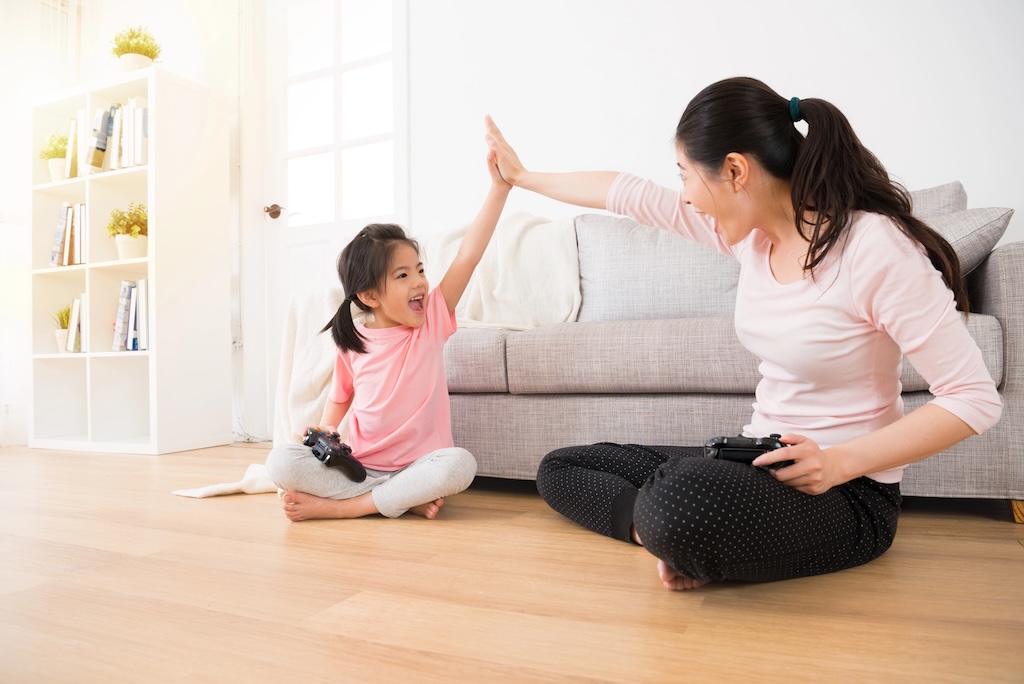
Follow Their Lead: If your child is particularly engaged with one activity, extend it rather than rushing to the next one.
Keep It Short: Young children have short attention spans. Five to 10 minutes per activity is often perfect.
Make It Routine: Incorporate one or two activities into daily routines (morning wake-up dance, clean-up songs, bedtime lullabies).
(See also: 8 WAYS TO BOOST YOUR BABY’S SPEECH AND LANGUAGE SKILLS)
Join In Fully: Your enthusiasm and participation will make these activities much more engaging for your child.
No Pressure for Performance: Focus on fun and exploration rather than getting it right.
Adapt for Age: Simplify movements and concepts for younger children, add complexity for older toddlers.

Reference:
- https://www.healthhub.sg/programmes/parent-hub/grow-well-sg/nurture-healthy-behaviours/#learn-well
All images: Depositphotos
All content from this article, including images, cannot be reproduced without credits or written permission from SingaporeMotherhood.
Follow us on Facebook, Instagram, Telegram, and TikTok for the latest article and promotion updates.